Skip to content
Ruhukya Demo Farm new logo white
  • Home
  • About
  • Demo Gardens
  • What We Grow
  • Blog
  • Contact
Ruhukya logo Webp
Book a Visit
Edit Content
  • Home
  • About
  • Demo Gardens
  • What We Grow
  • Blog
  • Contact
Book A Visit

Category: Agriculture

Papaya 3
Agriculture
February 5, 2026by timothyasiimwe@gmail.com

Practical Farming Demonstration Uganda 2026: Learn by Seeing What Works

How to Learn Farming That Actually Works: The Demo Farm Approach

You’ve probably heard advice about farming from somewhere. A neighbor who grew up farming. An extension officer who visited your village. Maybe a video you watched on your phone. Some of it sounds promising. Other advice conflicts directly with what you heard last week.

Here’s the problem: farming advice without context means almost nothing.

Someone tells you drip irrigation saves water. But does it work in your soil type? With your water source? For the crops you want to grow? The advice floating around rarely comes with those answers. You’re left guessing whether spending money on new techniques will help your farm or drain your savings on something that doesn’t fit your situation.

This is why demonstration farms exist.

Instead of imagining how a technique might work, you walk through plots where it’s already working. You see the irrigation lines running through an actual chili field. Touch the soil. Watch how the system connects. Ask questions about what went wrong during setup and how problems got fixed.

You leave with knowledge you can actually use.


What Makes a Demonstration Farm Different

Most agricultural training happens in classrooms or workshops. You sit. Listen to presentations. Look at PowerPoint slides showing ideal conditions. Maybe you get handouts with diagrams.

That’s not how farming works.

Farming happens in dirt. Under sun. Through rain and drought. Your crops don’t care what the textbook said. They respond to what actually happens in your field with your soil and your water and your weather.

A demonstration farm bridges the gap between theory and practice.

When you visit Ruhukya Demo Farm in Hoima, you’re not looking at pictures of successful farming. You’re walking through over fifty demonstration plots where techniques either work or fail in the same climate you farm in. The soil isn’t perfect laboratory soil. It’s Ugandan soil. The rain comes when it comes, just like on your farm. The sun beats down the same way.

This matters more than people realize.

Books show you ideal spacing for passion fruit vines. A demonstration farm shows you what happens when you actually plant at that spacing, plus what happens when you adjust for local conditions. You see which spacing produces better fruit in practice, not in theory.

You watch chili plants at different stages. Some planted two months ago. Others just starting. A few ready for harvest. Your eyes connect the timeline in a way no lecture can match.

The equipment isn’t sitting in a storage room. It’s out there working. Solar dryers process actual crops. Irrigation systems run through real fields. When something breaks or needs adjustment, you see how it gets fixed, not just how it’s supposed to work when everything goes perfectly.
Why "Seeing It Work" Beats Reading About It

Think about the last time you learned a physical skill. Riding a bicycle maybe. Or using a new tool. Someone could describe the process in detail. Show you diagrams. Explain the physics.

But you didn’t really understand until you tried it yourself. Until you felt the balance. Made mistakes. Adjusted.

Farming works the same way.

You can read about post-harvest handling. The book explains that crops lose value when moisture content stays too high. It recommends drying to specific levels. Everything sounds logical. But standing next to a solar dryer, seeing chili peppers going in wet and coming out preserved, watching the process from start to finish, that’s when understanding clicks into place.

You notice details the manual never mentioned. How to arrange products for even drying. What happens when you overload the dryer. How weather affects drying time. The small adjustments that mean the difference between preserved crops that sell at premium prices and crops that spoil despite your best efforts.

This kind of knowledge can’t be transmitted through descriptions. It requires observation.

At a good demonstration farm, you’re not just observing finished results. You see the process. The mistakes. The corrections. You learn what works consistently versus what works only under perfect conditions.

Someone shows you a thriving lavender plot. Beautiful. Healthy plants. But they also show you the plot from two seasons ago that struggled. They explain what went wrong. How they fixed it. What they learned. Both the success and the failure teach you something useful.

Books skip the failure parts. They show you the ideal outcome and assume you’ll figure out how to get there. Demonstration farms admit that getting to the ideal outcome requires navigating problems, and they show you how.


The Questions You Can Actually Get Answered


Walk into a classroom and ask a theoretical question. You’ll get a theoretical answer. The instructor explains principles. Covers general cases. Gives you frameworks to think about.

Walk through a demonstration farm and ask a specific question. You get a specific answer, often demonstrated right in front of you.

“How do I know when passion fruit is ready to harvest?” The person showing you around picks up a ripe fruit. Hands it to you. Points out the weight, the color, the subtle changes in skin texture. Picks up an unripe one for comparison. You feel the difference immediately.

“Does drip irrigation really save that much water compared to furrow irrigation?” They walk you to adjacent plots. Same crop. One with drip lines. One with furrows. You see the water usage data. More importantly, you see the plant health, the weed pressure, the labor involved in each system.

Questions about equipment get answered with equipment right there. How does this sprayer work? Here, hold it. Feel the weight. See how you’d carry it through a field. Notice how the nozzle adjusts. Try triggering the spray.

You can’t do this from reading a manual.

The most valuable answers come from questions you didn’t know you needed to ask. You might visit thinking about irrigation methods. But while walking through plots, you notice the spacing between rows. “Why this distance specifically?” The answer leads you to understand more about the crop than any amount of reading would have taught you.

Demonstration farms expose you to the full scope of farming decisions: soil preparation, seed selection, spacing, irrigation, pest management, harvest timing, post-harvest handling. Seeing all these elements together in working plots helps you understand how they connect. How a decision about irrigation affects pest pressure. How spacing influences harvest efficiency.

These connections don’t emerge from isolated pieces of advice.


What You Actually Learn on a Farm Visit


People sometimes think demonstration farm visits work like museum tours. You look at displays. Read descriptions. Take photos. Leave.

That’s not what happens.

You learn by engaging. By asking. By comparing what you see to what happens on your own farm.

Your first lesson usually involves soil. Not reading about soil. Digging your hands into it. Feeling the structure. Seeing what healthy soil looks like when it crumbles in your palm versus what degraded soil does.

You’ll see crops at multiple growth stages simultaneously. This matters because farming isn’t a single decision point. It’s a sequence. Each stage presents different challenges. Seeing all stages at once teaches you what to expect throughout the season rather than being surprised when your plants don’t match the description you read.

Equipment becomes concrete instead of abstract. You see the actual size of drip irrigation components. The physical layout of solar dryers. How much space they occupy. What maintenance they require. Whether they’d fit your operation.

Labor requirements become visible. How many people does it take to manage a quarter-acre of chili? What tasks consume the most time? Which ones require skill versus which ones anyone can handle? Watching work happen teaches you more about feasibility than labor calculations on paper.

You notice the small efficiencies that add up. How plots are arranged to minimize walking distance. Where tools get stored for easy access. The way harvested crops move from field to processing. These operational details rarely appear in farming guides, but they significantly affect whether a farm runs smoothly or becomes exhausting.

Failures get discussed openly. That plot over there? Didn’t work. Tried a new variety. Wrong choice for this climate. Learned valuable information from the loss. Now you won’t repeat the same expensive experiment.

The most important learning happens in those moments when something you assumed turns out differently than expected. You thought certain crops needed constant water. Walking through plots in the dry season, you see them thriving with minimal irrigation because of soil preparation done months earlier. Your assumption shifts. Now you understand the system differently.


How Practical Training Changes Your Farming Decisions


Knowledge that stays theoretical rarely changes behavior. You can know something intellectually without it affecting your choices.

But experiences stick differently.

After you’ve walked through demonstration plots, touched soil that’s been properly prepared, seen the difference between plants with adequate spacing and ones planted too close, those memories influence your decisions. Not because you’re following instructions, but because you experienced the contrast.

This shows up when you plan your own farm.

You’re not guessing about spacing anymore. You remember seeing it. Your hands recall the texture of good soil. Your eyes remember what healthy plants at each growth stage looked like.

When you shop for equipment, you have reference points. You held that kind of sprayer. Know its weight. Understand its capacity. The salesperson can’t exaggerate specifications because you’ve seen the real thing working.

You budget differently because you saw actual costs demonstrated. Not someone’s estimate of what things should cost. Real numbers from a working operation. This prevents expensive surprises.

Perhaps most valuable: you develop realistic expectations.

Demonstration farms show you what’s achievable with diligent work. You see what success looks like in your climate, with available resources, under real conditions. Your goals shift from fantasies about massive yields to practical plans for steady improvement.

You also learn to spot problems earlier. Because you saw what pest damage looks like at early stages, you recognize it on your farm before it spreads. You know what nutrient deficiency symptoms appear as rather than waiting until plants look obviously sick.

These kinds of changes happen gradually. You don’t notice them all at once. But over time, your farming becomes more deliberate. Less guesswork. More confidence in your decisions.


The Right Way to Visit a Demo Farm


Not all farm visits produce equal learning. How you approach the experience matters.

Come with questions, not blank expectations. Before visiting, write down what you want to understand. Specific challenges you face. Techniques you’ve heard about and want to see in action. Crops you’re considering. Your questions guide what you pay attention to.

Walk the plots yourself. Don’t just follow a tour guide pointing at things from a distance. Get close. Kneel down. Look at plant roots if possible. Feel the irrigation setup. Notice spacing between plants. The details you miss from ten meters away become obvious when you’re right there.

Take notes. Your memory will fail you. Write down observations while you’re looking at them. What spacing did they use for passion fruit? How deep were the irrigation lines buried? What time of year did they plant this particular crop?

Take photos that actually help. Don’t just snap pictures of plants. Photograph the details you’ll forget. The way equipment connects. The structure of planting beds. Signs showing growth stages. Measurements and labels.

Ask about failures, not just successes. Every farm makes mistakes. Learning what didn’t work saves you from repeating those expensive experiments. Most people are willing to share these stories if you ask.

Compare what you see to your own situation. Not everything demonstrated will fit your farm. Pay attention to which techniques match your circumstances and which would require adjustments. Understanding the difference prevents disappointment when you try to implement something that doesn’t translate directly.

Visit more than once if possible. Farming changes with seasons. What you see in March looks different from October. Multiple visits throughout the year give you a complete picture of how the farming cycle works.

Talk to other farmers visiting. They’re asking questions from their perspective. Their questions might reveal things you hadn’t thought about. Their observations add to your learning.

Don’t rush. A thorough visit to a demonstration farm takes hours, not minutes. You’re trying to understand systems, not just check boxes. Spend the time needed to truly see how things work.


When Hands-On Learning Matters Most


Some farming knowledge transfers fine through books or videos. Basic concepts. Broad principles. Historical background.

But practical implementation? That requires something more.

You face a major shift in your farming. Maybe moving from subsistence crops to cash crops. Maybe adding irrigation. Maybe trying new varieties. These transitions involve risk. Money spent on equipment or inputs. Time invested in learning new techniques. Potential crop failures.

In these moments, seeing techniques working before you commit your resources changes your decision-making completely.

You’re considering equipment purchases. Reading specifications tells you one thing. Watching the equipment operate in field conditions tells you whether it’ll actually work for your needs. Whether it’s reliable enough. Whether you can maintain it with available skills and parts.

You hear about a farming technique that could increase your income. Maybe intercropping. Maybe a different harvest schedule. The idea sounds good, but you need to see if it works in practice. A demonstration farm proves whether the technique delivers results or just sounds clever.

You want to expand but aren’t sure which direction makes sense. Seeing multiple approaches side by side like different crops, different methods, different scales helps you choose based on real outcomes rather than marketing promises.

Young people considering farming need to see it work before committing. Many young Ugandans view farming as a last resort. But seeing a well-run farm, understanding the business side, recognizing the genuine opportunities changes perspectives. Hands-on exposure creates farmers who enter the field by choice, with realistic knowledge rather than romantic notions.

Extension officers and agricultural professionals need practical reference points too. Recommending techniques you’ve read about differs from recommending what you’ve seen working. Demonstration farms turn theory into evidence-based advice.

Women farmers face extra skepticism when trying new approaches. Seeing techniques demonstrated successfully, having access to working examples, provides the proof needed to convince family members or community members that investments make sense.


Why Location Matters for Demonstration Farms


A demonstration farm in Kenya teaches you different things than one in Uganda. Same continent. Same general region. But different enough that techniques don’t always transfer directly.

Climate affects everything. Rainfall patterns. Temperature ranges. Dry season length. What works in one area fails in another. A demonstration farm in your climate zone shows you techniques proven under conditions matching yours.

Soil types vary dramatically even within countries. The demonstration you need is about farming in your kind of soil. Clay behaves differently than sandy loam. Crops respond differently. Irrigation needs differ. Seeing techniques adapted to your soil type matters immensely.

Available inputs change by region. Some places have easy access to specific fertilizers or equipment. Others don’t. Demonstration farms using locally available inputs teach you practical methods rather than ideal systems requiring resources you can’t get.

Markets differ. What sells well in one area might have no demand in another. A demonstration farm near your market shows you crops with proven local demand rather than crops that theoretically should sell.

Local pests and diseases present unique challenges. Seeing how farms in your area handle these specific problems gives you practical solutions rather than general advice that may not address what you’re actually facing.

This is why Ruhukya Demo Farm’s location in Hoima, Western Uganda matters to farmers in the region. The techniques demonstrated there work under the same conditions you face. The crops shown grow in your climate. The challenges addressed match your challenges.

You’re not learning how farming works in ideal conditions. You’re learning how it works in Ugandan conditions.


The Economic Side of Demonstration Farms


Learning costs money. Traditional agricultural training charges fees for courses, workshops, certificates. The knowledge you gain may or may not apply to your actual farm.

Demonstration farm visits offer different economics.

You see techniques before investing. This prevents expensive mistakes. If you were considering an irrigation system, seeing one in operation shows you whether it matches your needs before you spend money on equipment that won’t work for your situation.

The time investment makes sense. A few hours at a demonstration farm can save months of trial and error. Learning from someone else’s experiments means you skip failed attempts and move directly to approaches with proven results.

You can assess return on investment with real data. Not theoretical projections about what crops might earn. Actual information from a working operation about yields, input costs, labor requirements, market prices. This lets you calculate whether a farming approach makes financial sense for your circumstances.

Techniques that reduce waste directly improve your income. Better post-harvest handling means more of your crop reaches market in sellable condition. Proper timing increases quality and price. Efficient irrigation reduces water costs and labor. Each improvement compounds over seasons.

Some farmers visit expecting to learn one specific thing but discover something else that transforms their operation. You came to see irrigation techniques. But while there, you noticed their crop spacing improved yields significantly. That spacing change cost nothing to implement yet increased production.

The economic value of avoiding mistakes often exceeds the value of learning new techniques. If visiting a demonstration farm prevents you from investing in equipment that won’t work or planting a crop with no local market, you’ve saved far more than the visit cost.

What to Do With What You Learn

Learning without application accomplishes nothing. The point isn’t collecting agricultural knowledge. It’s improving your farm.

Start small with new techniques. Don’t transform your entire operation based on one visit. Try a single plot using what you learned. See how it performs. Adjust based on results. Expand if it works.

Document your attempts. Take photos as you implement new spacing or irrigation or post-harvest methods. Note what works and what needs adjustment. This creates your own demonstration record to refer back to.

Connect with other farmers who’ve visited the same demonstration farm. Share observations. Discuss how you’re each adapting techniques. Learn from each other’s experiences implementing what you saw.

Return for follow-up questions as you implement. The first visit gives you broad understanding. But as you actually try things on your farm, specific questions emerge. Going back to ask those questions while looking at the demonstration again deepens your knowledge.

Teach others what you learn. Explaining techniques to family members or neighboring farmers forces you to clarify your understanding. Plus it spreads the knowledge through your community.

Track your results. When you implement something from a demonstration visit, monitor what happens. Did yields improve? Did labor decrease? Did crop quality increase? Quantifying results shows you which techniques matter most for your specific situation.

Be patient with yourself. Implementing new farming techniques takes time. Plants don’t grow faster because you’re watching. Soil doesn’t improve overnight. Measure progress across seasons rather than expecting immediate transformation.


Making Demonstration Farms Part of Your Farming Journey


One visit teaches you something. Regular visits build expertise.

Think of demonstration farms as a resource you return to rather than a one-time experience. Different seasons show different aspects of farming. Visiting multiple times across a year lets you see the complete cycle.

Your learning needs change as your farm develops. When you’re starting, you need broad foundational knowledge. As you gain experience, you have more specific questions. The same demonstration farm serves both levels of learning if you return as your needs evolve.

Bring different people on different visits. Maybe your first visit is alone, focused on your personal learning. Later, bring family members who work on the farm. Their questions and observations add perspectives you missed. If you’re making a major investment, bringing the person who’ll manage that aspect helps everyone understand the commitment.

Use visits to stay current with new techniques. Agriculture evolves. New crop varieties emerge. Equipment improves. Farming methods develop. Demonstration farms adopt and test these innovations. Regular visits keep you informed about developments worth considering.

Connect your demonstration farm visits to your farm’s planning cycle. Visit before major planting seasons. See what’s working. Decide what to try. Visit during growing season to see techniques at different stages. Visit after harvest to understand post-harvest handling.

This rhythm of learning and implementation creates steady improvement rather than dramatic, risky changes. Each season you try something new, based on what you observed working at the demonstration farm. Some experiments succeed. Others teach you valuable lessons. Your farming knowledge expands through repeated cycles of observation and practice.


Why This Approach Works When Others Don’t


Agricultural extension has tried many approaches to improve farming knowledge. Radio programs. Printed guides. Classroom workshops. Demonstration farms aren’t new either. But they work more consistently than most training methods.

Here’s why:

The learning is sensory, not just intellectual. You see, touch, smell, sometimes taste what you’re learning about. Multiple senses create stronger memories and deeper understanding than reading or listening alone.

Context comes included. When you see a technique, you also see everything around it. The plot layout. Other crops nearby. Equipment locations. Drainage patterns. This contextual information rarely appears in written guides but critically affects implementation.

Questions get answered immediately. In a classroom, you write down questions to ask later. At a demonstration farm, you ask while you’re looking at exactly what you’re questioning. The answer makes immediate sense because you’re experiencing the context.

Real constraints are visible. Books present ideal scenarios. Demonstration farms show what’s achievable with actual limitations including real budgets, available labor, local materials. This makes the knowledge practical rather than theoretical.

Success and failure both teach you. Every plot represents an experiment. Some proved excellent. Others merely adequate. A few failed completely. Learning from the full range of outcomes makes you a better farmer than only knowing what works perfectly.

Peer learning happens naturally. Other farmers visit too. You hear their questions. Share observations. Learn from their perspective. This community aspect enhances individual learning.

Implementation becomes less daunting. When you’ve seen something working, trying it yourself feels manageable. The gap between “I heard about this” and “I’ll try this” shrinks dramatically when you’ve witnessed it in action.

Your Next Steps

Reading about demonstration farms and practical training is one thing. Walking through actual plots, seeing techniques working, asking your specific questions is something entirely different.

If you’re farming in Western Uganda, particularly around Hoima District, Ruhukya Demo Farm offers exactly this kind of hands-on learning. Over fifty demonstration plots. Crops at different stages. Equipment working in real field conditions. People who’ll answer your specific questions based on their experience farming in the same climate you face.

You don’t need to prepare extensively. Come with your curiosity. Bring questions about your farming challenges. Wear clothes and shoes suitable for walking through fields. Bring something to write notes. Your phone for photos if you have one.

Book a visit when it fits your farming schedule. Maybe just before planting season when you’re making decisions about what to grow. Maybe during growing season when you’re dealing with challenges and want to see solutions demonstrated. Maybe after harvest when you’re planning improvements.

The investment is a few hours of your time. The return is practical knowledge you’ll use across multiple seasons. Techniques that improve your yields, reduce your costs, or help you produce better quality crops. Confidence in your farming decisions because they’re based on what you’ve seen working rather than what someone told you should work.

That difference changes everything.

Farming happens in fields. It involves soil and sun and water and plants. No amount of reading replaces the experience of seeing it work. Demonstration farms exist to give you that experience before you invest your own resources.

The question isn’t whether hands-on learning helps. Obviously it does. The question is whether you’ll take advantage of it.

Your farm deserves decisions based on knowledge, not guesses. Your time and money deserve to go toward techniques proven under conditions matching yours. Your questions deserve answers you can see demonstrated, not just described.

That’s what practical farming training through demonstration offers.

The plots are there. The techniques are working. The knowledge is available. What you do with it is up to you.

Ready to see practical farming techniques working in Western Uganda’s climate? 

Book your visit to Ruhukya Demo Farm and walk through demonstration plots showing everything from land preparation through post-harvest processing. Schedule your farm visit or call +256 776 420995.
Read More
2
AgricultureAgribusiness
February 4, 2026by timothyasiimwe@gmail.com

High-Value Crops for Small Farms: What Grows Profitably 2026

High-Value Crops for Small Farms: What to Grow When Land is Limited

You have half an acre. Maybe less. Family needs income. Land prices mean you won’t be expanding anytime soon. Traditional advice says grow maize, beans, cassava. But the numbers don’t work. Half an acre of maize feeds your family for a few months but generates little cash.

Meanwhile, your neighbor with a quarter-acre vegetable plot sends two kids to secondary school. Bought a motorcycle. Built an addition on the house. Same soil. Same climate. Different crops. Different results.

The difference isn’t farming skill. It’s understanding which crops generate income on limited land.

Most farming advice assumes you have acreage to work with. Plant widely spaced crops. Accept modest returns per square meter because you’re farming across many meters. That approach works when land is abundant and cheap.

It fails completely when land is your limiting factor.Small farms need different strategies. Crops that produce intensively. Markets that reward quality over quantity. Growing methods that maximize every square meter.

Get these pieces right, and limited land stops being a disadvantage.

The Reason Small Farms Dont Profit Much With Common Crops.

Maize only makes sense for large farms. Plant mechanically. Apply inputs across broad areas. Harvest efficiently with equipment. Sell in bulk. The business works because they sell enough volume of it to make the math work.  

On small plots, the economics reverse. You’re hand planting. Hand weeding. Hand harvesting. Labor input per kilogram of maize is high. But the price per kilogram stays the same whether you grew it on half an acre or fifty acres.

Your production costs money, but the market doesn’t pay more for small-batch maize. You end up with food for home consumption, which has value, but limited cash to pay school fees or invest in farm improvements.

Beans present similar challenges. Cassava takes months to mature and produces starchy roots worth very little per kilogram. Sweet potatoes grow well but command low prices.

These crops feed Africa. They’re important. But they’re not solving the income problem for families with a quarter-acre.

What changes the equation? Crops where small plots can produce high value through intensive management.

What Makes Crops Valuable on Small Land

Value per square meter is the metric that matters, not total production. Not even profit margin in percentage terms. Raw income generated per square meter of land.

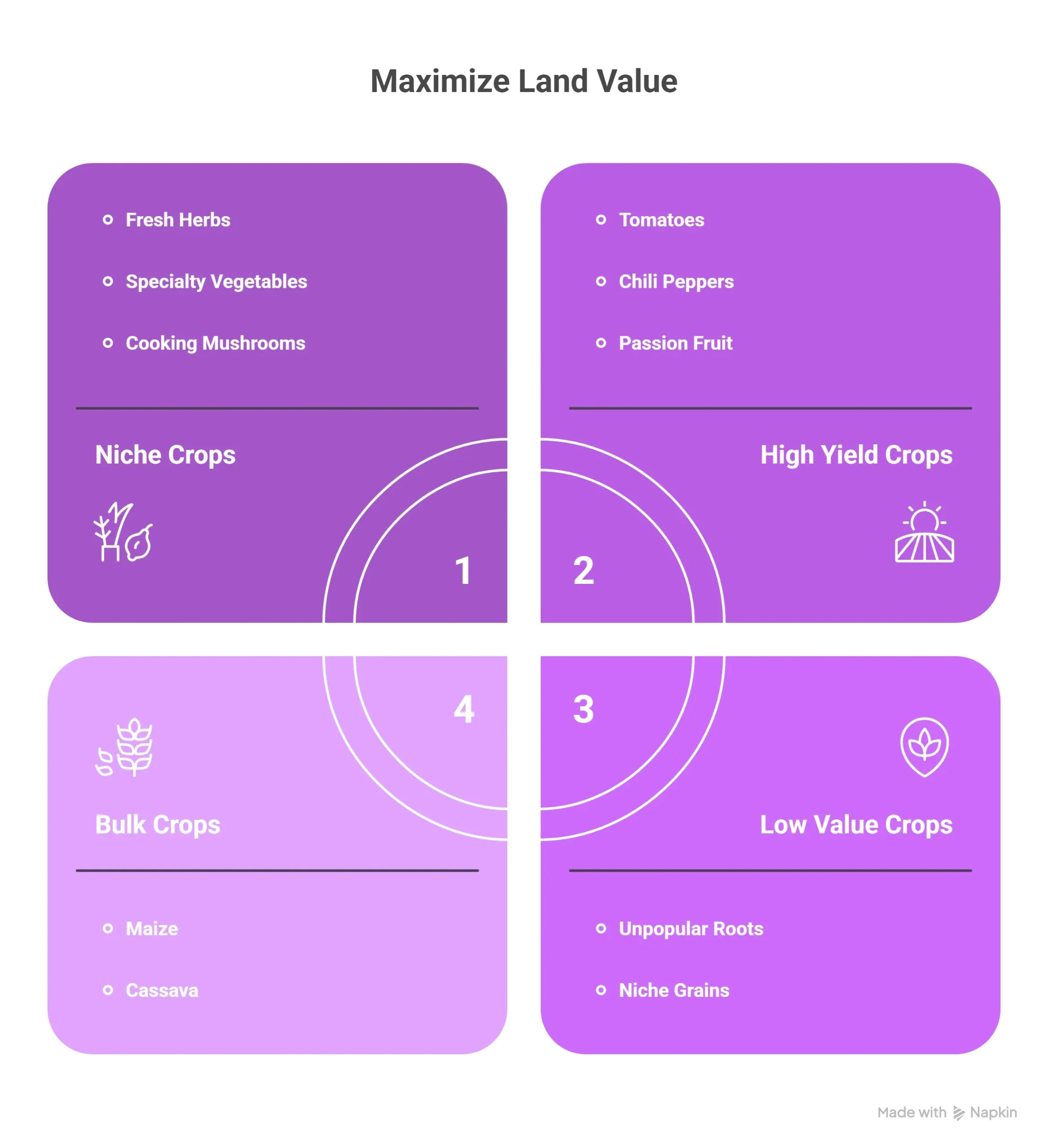
High-value crops share characteristics. They produce either continuously or very quickly. Markets pay well for them, especially when quality is high. They don’t require huge land areas to justify effort. Small quantities still fetch meaningful prices.

Vegetables check many of these boxes. A well-managed quarter-acre of tomatoes generates more income than two acres of maize. Chili peppers on a tenth of an acre can match cassava from a full acre. Leafy greens produce continuously, providing regular small sales that sustain families between major harvests.

These aren’t exotic crops requiring specialized knowledge. They’re vegetables people eat daily. Markets exist naturally. Growing them intensively on small plots just requires understanding their specific needs.

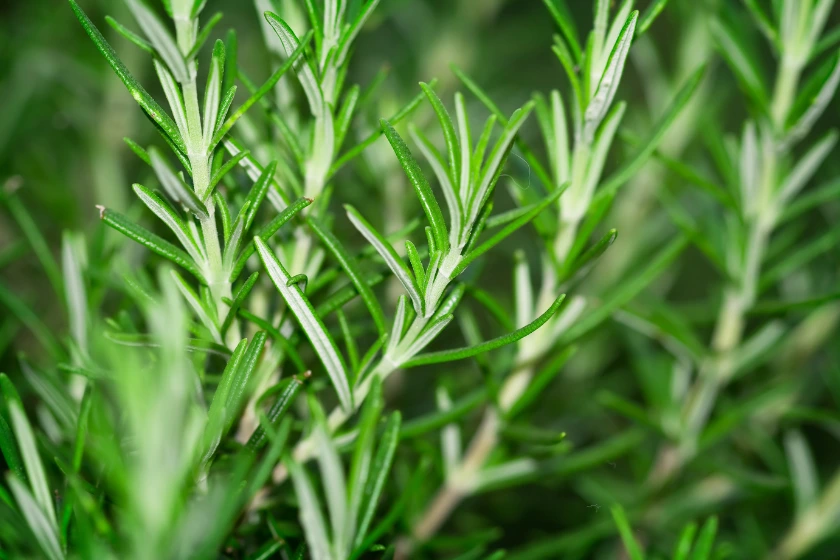
Herbs take the intensive approach further. Basil, rosemary, thyme, parsley occupy minimal space but command premium prices. Restaurants and urban consumers pay well for fresh herbs. A few square meters of herb production generates income disproportionate to the space involved.

Specialty crops add another dimension. Mushrooms grow in shade, using vertical space that might otherwise produce nothing. Passion fruit vines climb vertically, producing abundant fruit from minimal ground area. Tree tomatoes fruit prolifically on small plots.

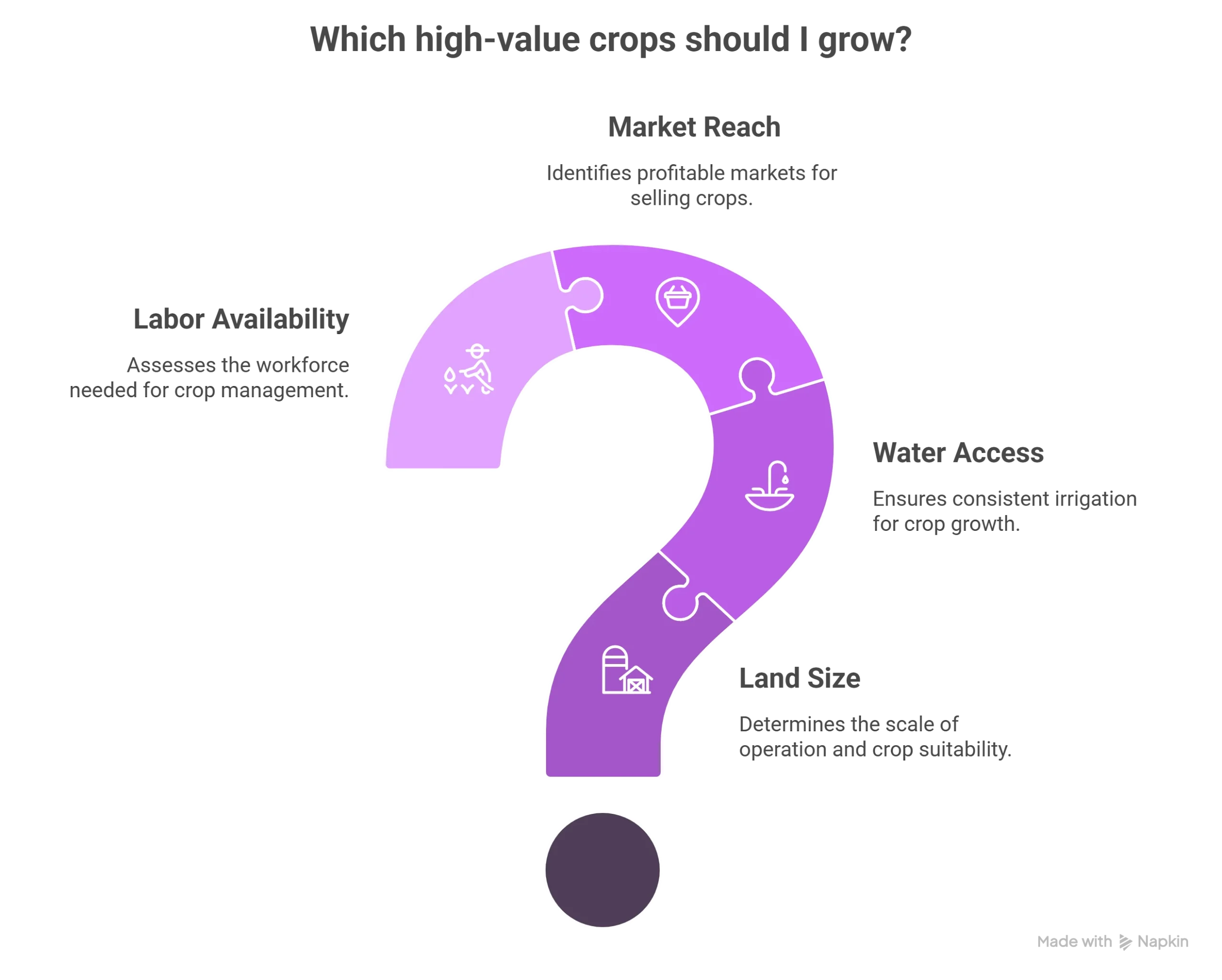
The key is matching crops to your specific situation. How much land do you have? What water access? Which markets can you reach? What labor is available? Your answers point toward specific high-value crops that fit.

Vegetables That Turn Small Plots Into Income

A) Tomatoes might be the gateway crop for small-scale intensive farming. Everyone eats tomatoes. Markets exist everywhere. Prices stay strong when supply is managed well.

But tomatoes demand attention. They need consistent water without being waterlogged. Proper spacing to reduce disease. Support for plants to grow vertically. Regular scouting for pests. Timely harvest.

Get these details right, and tomato production rewards you well. A quarter-acre managed properly produces fruit for months. Income flows regularly as fruits ripen in cycles. The attention required feels worth it when you’re harvesting three or four times per week.


B) Leafy vegetables produce even faster. Amaranth, nakati, sukuma wiki, lettuce, cabbage each matures quickly. Some are ready to harvest within weeks of planting. Others produce repeatedly if you harvest outer leaves while letting plants continue growing.

These greens occupy minimal space when planted intensively. Raised beds allow tight spacing. Intercropping maximizes land use. Succession planting means something is always ready for harvest and market.

Markets for leafy greens stay strong because production is immediate. Unlike crops that store well, fresh greens reach consumers quickly. This creates constant demand rather than glut periods when everyone harvests simultaneously.


C) Chili peppers deserve special mention. Once established, chili plants produce for months. Harvest happens continuously as pods ripen. Small plots generate substantial production over a season. Dried chili stores well, giving you market timing flexibility. Prices for quality dried chili stay strong.

At Ruhukya Demo Farm, you can compare chili production methods side by side. See plant spacing that optimizes production. Observe irrigation techniques. Learn when to harvest for maximum quality. Understanding these details transforms chili from a crop you’ve heard about into one you can grow profitably.

How Space-Efficient Crops Change Farm Design

Traditional farming layouts assume you have room to spread out. Wide paths between rows. Large spacing between plants. Equipment access requirements.

Small farms farming intensively design differently. Raised beds concentrate production and soil improvement efforts. Narrow paths minimize wasted space. Vertical growing adds another production layer.

Raised beds make particular sense. You’re building soil quality in specific, managed areas rather than trying to improve an entire field. Compost, manure, and other amendments go exactly where plants need them. Drainage improves. You can work beds without compacting soil by walking on them.

Height works in your favor. Passion fruit trellises occupy minimal ground space but produce heavily. Climbing beans use vertical space. Staked tomatoes produce more than sprawling plants while using less ground area.

Some farmers layer their production. Tall crops provide partial shade for shade-tolerant species beneath.

Nitrogen-fixing plants improve soil for heavy feeders nearby. Deep-rooted crops access nutrients shallow-rooted crops can’t reach. Each plant contributes to the system rather than competing with neighbors.

Water management becomes precise rather than broad. Drip irrigation waters specific plants rather than entire fields.

Mulching conserves moisture exactly where needed. You can justify more attention to water management because the income per square meter rewards that attention.

This intensive approach feels different than traditional farming. It’s more like gardening than field agriculture. But the economics support the effort when land is limited and income needs are real.

Markets That Reward Quality Over Volume

You’re not competing with large-scale commercial farms. They dominate commodity markets through volume. You win through different positioning.

Urban consumers increasingly value freshness and quality. They’ll pay premiums for vegetables harvested that morning versus produce that’s been in supply chains for days. Your proximity to markets becomes an advantage if you leverage it.

Restaurants need consistent supply of quality ingredients. They don’t need huge volumes, but they need reliability. A small farm supplying fresh herbs, specialty vegetables, or premium tomatoes can build lasting relationships with restaurants that value dependability.

Hotels, schools, hospitals, and corporate cafeterias all need vegetables. They prefer working with suppliers who meet quality standards consistently. Volume requirements often match well with small farm production capacity.

Direct sales to consumers through farm gates or small local markets capture more value than selling to middlemen. Your smaller production volumes actually fit this marketing channel better than large-scale production would.

The key is understanding what differentiates your product. If it’s freshness, market that. If it’s chemical-free production, consumers care about that. If it’s unusual varieties not available elsewhere, that’s your edge.

Price competition with commercial farms leads nowhere good for small producers. Quality competition, specialty crops, and direct marketing create spaces where small farms have genuine advantages.

Crops You Can Start Small and Scale

One risk with high-value crops is the learning curve. Vegetables demand more knowledge than maize. Herbs have specific requirements. Mistakes can be expensive if you invest heavily before understanding production.

Starting small manages this risk. Pick one crop. Maybe tomatoes because you know the market exists. Dedicate a small plot. Learn everything about growing it well. Solve problems on a manageable scale.

Once you’ve mastered one crop, income from it funds expanding that production or adding a second crop. Your growing knowledge and proven market relationships reduce risk.

Leafy greens work particularly well for this approach. Start with a few beds of sukuma wiki or amaranth. Learn the spacing, watering, pest management. Prove to yourself that you can grow and sell it profitably. Then expand. 

This sequential approach builds confidence and capability simultaneously. You’re not betting the whole farm on switching crops entirely. You’re adding high-value production alongside whatever you’re already growing.

As income from intensive high-value crops grows, you can shift more land and effort into them. Eventually, you might dedicate most of your small farm to vegetables or herbs because the economics clearly favor them for your situation.

What You Need to Make Intensive Growing Work

High-value crops demand more inputs than subsistence crops. Not necessarily expensive inputs, but consistent attention to specific needs.

Water access matters critically. Vegetables can’t tolerate drought the way cassava can. You need either reliable rainfall patterns or irrigation. Drip systems work excellently for small intensive plots. Even simple watering cans work if labor is available.

Soil fertility needs attention. Intensive production extracts nutrients faster than extensive farming. Compost, manure, proper crop rotation, and occasional purchased fertilizers keep soil productive. But you’re applying these inputs to small, productive areas rather than spreading them thinly across large fields.

Pest and disease management requires vigilance. Check plants regularly. Notice problems early. Intervene before minor issues become harvest-destroying disasters. This sounds demanding, but small plots make it manageable. You’re not monitoring acres of crops. You’re watching a few intensively planted beds.

Knowledge becomes your main input. Understanding each crop’s specific requirements. Recognizing problems quickly. Knowing market preferences. Timing plantings for optimal prices. None of this requires money, but it does require learning.

This is where demonstration farms prove invaluable. You see intensive production working. Notice spacing and arrangement. Observe irrigation setup. Ask about challenges and solutions. The knowledge you gain guides your own implementation effectively.

Mistakes That Waste Small Farm Potential

  1. The most common mistake is trying to farm intensively without adequate water. Vegetables need consistent moisture. Planning intensive production without securing water first sets you up for failure and frustration.
  2. Another trap is planting everything at once. Market gluts destroy prices. Continuous small plantings work better than one large planting. You maintain steady income rather than feast-or-famine cash flow.
  3. Poor variety selection creates problems. Some tomato varieties suit intensive management. Others are bred for extensive commercial production. Growing the wrong variety means fighting the plant’s natural tendencies rather than working with them.
  4. Ignoring post-harvest handling destroys value. High-quality production means nothing if crops deteriorate before reaching buyers. Learning proper post-harvest techniques preserves the value you created through intensive growing.
  5. Expanding too fast before mastering fundamentals leads to overwhelming problems. Better to farm a quarter-acre excellently than a full acre poorly. Income comes from productive, well-managed land, not from maximum acreage farmed.
  6. Neglecting market development causes waste. Growing successfully but having nowhere to sell means production effort generated no income. Building market relationships deserves as much attention as production improvement.

Real Numbers From Small Intensive Farms

The economics work when you calculate income per square meter rather than per hectare.

A quarter-acre of well-managed tomatoes can generate income comparable to two acres of maize. The tomatoes require more labor and inputs. But you’re working a much smaller area, making that attention feasible. The income per hour of labor often exceeds extensive crop production significantly.

Leafy greens producing continuously create steady cash flow that extensive crops can’t match. Harvesting and selling every few days provides the regular income families need for daily expenses. Large harvests once or twice a year don’t meet that need as well.

Chili peppers dried and stored give you market timing advantages. You can sell when prices are favorable rather than being forced to sell immediately after harvest. This flexibility often doubles income compared to distress selling.

The specific numbers vary by crop, location, and market access. But the pattern stays consistent: intensive production of high-value crops generates more income from limited land than extensive production of low-value crops.

Why Some Farmers Resist and Others Thrive

Shifting from traditional crops to intensive high-value production requires changing your farming mindset. Some farmers resist because it feels risky. Everything they’ve done before was different. The new approach demands learning and adjustment.

Others embrace the change because they’ve calculated their options. Half an acre of maize produces x amount of income. Half an acre of vegetables could produce multiples of x. The choice becomes obvious when you look at it clearly.

Risk feels different when you understand it properly. Yes, vegetables demand more knowledge than maize. But the knowledge is learnable. Yes, markets might fluctuate. But so do maize prices, and vegetable income even at low prices often exceeds maize income at good prices.

Success comes from starting where you are and improving systematically. Not transforming everything at once. Not betting the family’s food security on crops you don’t understand yet. But not staying stuck in approaches that clearly aren’t generating the income you need either.

Farmers who thrive with intensive high-value crops typically visit places where it’s working. They see the production. Talk to farmers making money from small plots. Understand the challenges honestly rather than romanticizing or catastrophizing.

Then they try it on a small scale. Learn from mistakes that don’t destroy the household. Scale up what works. Adjust what doesn’t. Build competence and confidence together.

Your Land Isn't the Limitation You Think

Small farm size feels limiting when you compare yourself to large-scale operations. They have economy of scale. You have a quarter-acre.

But intensive high-value production reverses the advantage. Large farms can’t give every square meter the attention you can. They can’t harvest daily and rush fresh produce to nearby markets. They can’t build direct relationships with individual buyers.

Your size becomes your advantage in markets that value quality, freshness, and flexibility over sheer volume.

The path forward is choosing crops that reward intensive management. Learning to grow them excellently. Finding markets that value what you produce. Continuously improving production per square meter rather than seeking more meters.

Land scarcity pushes you toward farming that actually works better economically than extensive approaches. You just need to recognize the opportunity rather than seeing only the limitation.

Your quarter-acre isn’t too small. It’s exactly right for high-value intensive production that can support your family and build a genuine farming business. The crops are there and the markets exist. The question is whether you’ll farm your land according to its actual potential or according to outdated assumptions about what farming should look like.

See high-value crops thriving on small demonstration plots. Learn intensive growing techniques. Understand market requirements. Get your specific questions answered at Ruhukya Demo Farm. Book your visit or call +256 776 420995.

Read More
3
SoilAgriculture
August 18, 2025by timothyasiimwe@gmail.com

Soil Health for Small Farms 2026

Soil Health for Small Farms: Building Your Most Valuable Asset

You can’t see most of what makes soil work. Multiple organisms too small for eyes, chemical exchanges happening constantly, organic matter breaking down, releasing nutrients, building structure. The invisible foundation your farm depends on.

Most farmers pay attention to what’s visible; Seeds going into ground plants emerging, leaves turning colors that signal problems, fruits forming and ripening. All important. But they’re responding to what’s happening underneath, in the soil those roots occupy.

Healthy soil makes farming easier. Plants resist diseases better. Droughts don’t devastate as quickly. Fertilizers work more effectively. Water soaks in rather than running off. Weeds don’t dominate as aggressively. The same effort produces better results.

Degraded soil fights you constantly. Plants struggle despite your care. Every input costs more and delivers less. Yields disappoint. Quality suffers. You work harder for worse outcomes.

The difference isn’t visible from a distance. Two fields might look similar. Same crops. Same sunshine. Similar rainfall. But one farmer harvests abundant, healthy produce while the other barely covers costs. Look closer and you’ll find the answer in the soil.

Why Many Small Farms Struggle With Soil

Soil doesn’t ask for attention. It sits there silently, accepting whatever treatment it receives. Plant the same crop year after year, and soil doesn’t complain. Remove all crop residues without replacing organic matter, and soil doesn’t protest. Apply excessive fertilizer that damages soil structure, and you won’t hear objections.

But soil keeps score. Each poor decision extracts a cost. Sometimes immediately. Usually gradually. Over seasons and years, soil either builds or degrades based on how you manage it.

Many small-scale farmers inherited degraded soil. Previous generations didn’t understand soil biology. Or they understood but had no choice but to push soil beyond sustainable limits. Either way, the soil you’re farming now might already be compromised before you make a single decision.

Common practices continue the damage. Burning crop residues removes organic matter soil needs. Continuous cultivation breaks down soil structure. Monoculture depletes specific nutrients repeatedly. Over-fertilization can harm beneficial soil organisms. Each practice seems reasonable in isolation but compounds into serious degradation.

The trap is that degraded soil creates a cycle. Poor soil produces weak crops. Weak crops produce little residue. Little residue means less organic matter returning to soil. Less organic matter means poorer soil next season. The spiral continues downward.

Breaking this cycle requires understanding what soil actually needs.

What Healthy Soil Looks Like

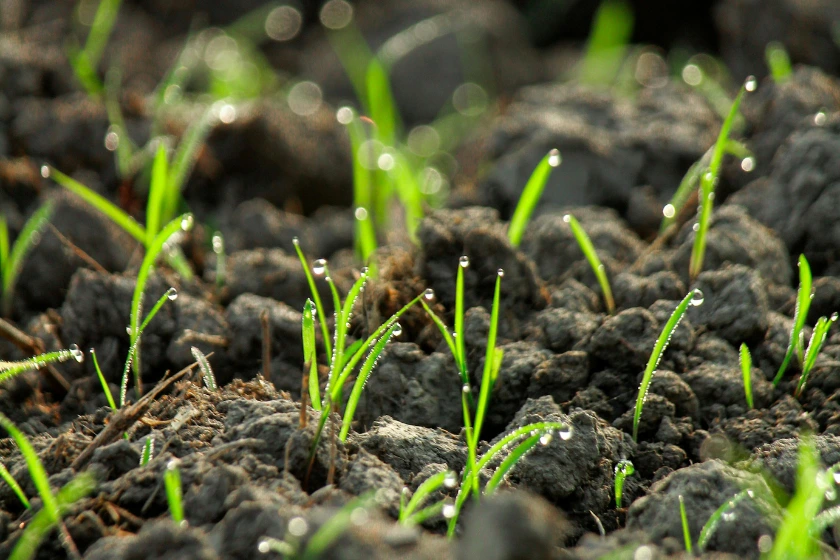
Pick up a handful of healthy soil. It crumbles easily. Forms aggregates, small clumps that hold together but break apart without force. Feels slightly moist even during dry periods. Smells earthy, like a forest floor after rain.

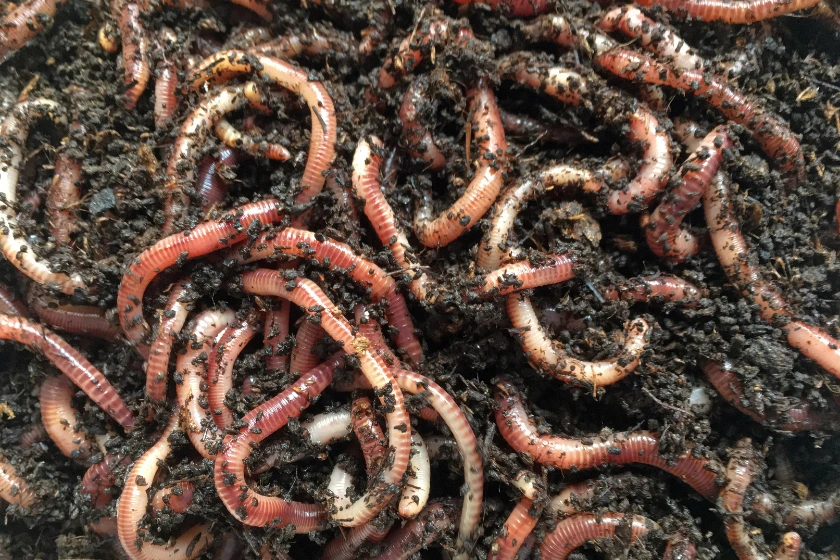
Look closely. You might see earthworms. Earthworm presence indicates healthy soil biology. They eat organic matter, mixing it through the soil profile. Their tunnels allow air and water movement. Their castings add nutrients in plant-available forms.

Drop water on healthy soil. It soaks in quickly. Doesn’t puddle on the surface. Doesn’t run off carrying topsoil. The soil structure holds water like a sponge while allowing excess to drain.

Dig down past the surface. Roots penetrate deeply in healthy soil. They spread out, exploring for nutrients and water. In degraded soil, roots stay shallow and stunted, unable to access resources deeper in the profile.

Plant healthy soil and notice the difference. Seeds germinate strongly. Seedlings establish quickly. Growth stays consistent rather than stunted. Leaf color indicates plants accessing adequate nutrients. Drought resistance improves because roots reach deeper water.

The visual differences become obvious once you know what to look for. Healthy soil supports consistent productivity. Degraded soil struggles even with optimal weather and inputs.

The Foundation: Organic Matter

Organic matter is partially decomposed plant and animal materials plus the living organisms breaking it down. This brown to black substance holds water, stores nutrients, feeds soil life, and builds soil structure.

Most Ugandan soils naturally contained significant organic matter before farming. Forest soils, grassland soils, wetland soils all had organic matter from continuously decaying vegetation. Farming removes vegetation faster than natural processes replace it. Organic matter content drops. Soil quality follows.

Rebuilding organic matter reverses this decline. Add more organic material than you remove. Let decomposition work gradually. Support the organisms doing the decomposing. Over time, soil quality rebounds.

Crop residues provide the easiest organic matter source. Maize stalks after harvest. Bean plants pulled and left. Weed vegetation before it seeds. Anything that grew from your soil can return to it. Instead of burning or removing residues, chop them and spread across the field or add to compost.

Animal manure offers concentrated organic matter plus nutrients. Cow manure, chicken droppings, goat manure, pig waste all improve soil when properly managed. Fresh manure can burn plants, so age it first or compost it with other materials. Applied properly, manure transforms soil fertility.

Green manure crops grow specifically to add organic matter. Plant legumes or other fast-growing crops during off-seasons. Let them grow. Cut before flowering and dig into soil. As they decompose, they add organic matter while providing nutrients.

Compost concentrates organic matter improvement. Mix various organic materials, crop residues, kitchen scraps, animal manure, leaves, grass clippings. Let decomposition happen in a pile rather than spread across the field. Apply finished compost where it matters most.

Each method adds organic matter. Combining several methods accelerates improvement. The key is stopping organic matter removal while increasing organic matter addition.

Making Compost Work for You

Compost seems complicated until you understand the basics. Then it becomes simple. Mix materials that decompose. Provide conditions that encourage decomposition. Wait. Use the result.

Start with materials you already have. Crop residues from your field. Kitchen waste from your household. Weeds pulled before they seed. Animal bedding mixed with manure. Anything that was recently alive and plant-based works.

Layer these materials in a pile. Wet materials alternate with dry materials. Green materials mix with brown materials. The variety provides different nutrients and speeds decomposition. Size matters less than mixing.

Keep the pile moist like a wrung-out sponge. Too dry and decomposition slows. Too wet and it becomes slimy and smells bad. Add water if it dries out. Cover if rains make it soggy.

Turn the pile occasionally. Moving outer material to the center, center material to outside. This mixes everything, adds air, and speeds the process. How often depends on your urgency. Weekly turning produces compost faster. Monthly turning still works but takes longer.

You’ll know compost is ready when original materials become unrecognizable. Dark, crumbly, smelling earthy. This usually takes several months. The exact timing varies with climate, materials, and management.

Use finished compost around high-value crops first. Vegetables, intensive plots, crops that reward extra fertility. Spread it on the soil surface or mix into planting holes. A little compost concentrated where it matters beats thin spreading across entire fields.

The process seems like work initially. But compost essentially makes itself if you provide reasonable conditions. Your main job is gathering materials and providing moisture.

How Crop Rotation Protects Soil

Planting the same crop repeatedly exhausts specific nutrients, encourages crop-specific pests and diseases, and degrades soil structure in particular ways. Rotation breaks these patterns.

Different crops have different root patterns. Deep-rooted crops bring up nutrients from lower soil layers. Shallow-rooted crops use surface nutrients. Alternating between them balances nutrient use across the soil profile.

Different crop families attract different pests and diseases. When you plant a different crop, the previous crop’s problems find no host. Pest and disease pressure drops without chemical intervention.

Legumes add nitrogen through their relationship with soil bacteria. Follow heavy-feeding crops like maize with beans or other legumes. The legumes restore nitrogen the maize consumed while producing a harvest themselves.

The rotation pattern matters less than the principle. Don’t plant the same crop in the same spot season after season. Mix it up. Even simple two-crop rotation provides benefits. Three or four-crop rotation works better.

Small plots make rotation challenging. You want to keep growing what sells well. But even small adjustments help. If you grow tomatoes, rotate with different crops within the tomato family. Or rotate just portions of your plot while keeping some in preferred crops.

Think of rotation as insurance. It prevents the buildup of problems while building soil health. The discipline pays back through more consistent yields and reduced pest pressure.

Living Soil Needs Protection

Soil organisms, bacteria, fungi, earthworms, tiny arthropods, countless others, perform services no external input can replicate. They decompose organic matter. Fix nitrogen from air. Make nutrients plant-available. Create soil structure. Suppress diseases.

These organisms need three things: food, moisture, and protection.

Organic matter provides their food. Add compost, crop residues, manure, and soil organisms thrive. Remove all organic matter and they starve.

Moisture keeps them active. Dry soil goes dormant. Saturated soil suffocates them. Moderate moisture levels support active soil biology. Mulching helps maintain this moisture.

Protection means avoiding practices that harm soil life. Excessive chemical fertilizers can damage beneficial organisms. Some pesticides kill more than target pests. Continuous bare soil exposes organisms to temperature extremes and drying.

Mulching protects soil surface. Spread crop residues, grass clippings, leaves, any organic material across your planting beds. This covers moderates temperature, conserves moisture, suppresses weeds, and feeds soil organisms as it decomposes.

The organisms you can’t see do more for soil fertility than anything you can buy. Protecting and feeding them costs little but returns enormous value.

Avoiding the Over-Fertilization Trap

Synthetic fertilizers can boost production. They can also create dependency and damage soil health when misused.

The trap works like this: you apply fertilizer. Crops respond with increased growth. You harvest more. The success encourages heavier fertilizer use next season. But the fertilizer doesn’t build soil organic matter. It doesn’t improve soil structure. It doesn’t support soil organisms. Eventually, soil becomes dependent on constant fertilizer input while its natural fertility declines.

Balance is important. Fertilizer used alongside organic matter addition works well. Fertilizer as a complete replacement for soil building creates problems.

When you do use fertilizer, target it precisely. Rather than broadcasting across entire fields, apply near plant roots where it’s needed. This reduces waste, cuts costs, and minimizes environmental impact.

Soil testing helps identify actual needs rather than guessing. But even without testing, observing plant growth tells you something. Stunted plants with pale leaves might need nitrogen. Poor fruiting might indicate phosphorus deficiency. Observing responses to small test applications guides larger decisions.

The goal isn’t eliminating fertilizer. It’s using it strategically as one tool among many for building soil fertility.

What Demonstration Farms Show About Soil

Reading about soil health teaches concepts. Seeing healthy soil in action teaches something deeper.

At demonstration farms, you compare soil managed different ways. One plot managed conventionally. Another with heavy compost addition. Another with crop rotation and cover cropping. The visual comparison makes abstract principles concrete.

You see how quickly water soaks into well-managed soil versus running off degraded soil. You notice crop health differences between plots. You observe earthworm presence varying with management. These direct comparisons clarify what practices actually accomplish.

Learning through hands-on demonstration  accelerates your understanding. You can dig into soil, feel the structure, see the roots, smell the earthiness. This sensory experience sticks in memory better than descriptions.

Questions get answered immediately. Why compost this way rather than another? How much mulch provides benefits without smothering plants? When should you turn compost? Demonstration answers these questions by showing rather than telling.

The investment of a farm visit returns through years of improved soil management based on what you witnessed working.

Simple Practices That Compound

Soil improvement doesn’t require dramatic intervention. Small practices sustained over time compound into major improvements.

  1. Stop removing all crop residues. Leave some. Let them decompose in place. This single change begins rebuilding organic matter.
  2. Start a small compost pile. Even if it’s just kitchen scraps and weeds initially. Learn the process on a manageable scale. Expand as you gain confidence.
  3. Add animal manure when available. Even small amounts help. A few wheelbarrows spread on vegetable beds makes noticeable difference.
  4. Rotate crops on at least some of your land. Start with portions you can manage easily. Expand rotation as you see benefits.
  5. Mulch high-value plots. You don’t need to mulch everything immediately. Start where returns justify effort. Learn what works. Apply lessons more broadly.
  6. Protect soil from erosion. Even slight slopes lose topsoil during heavy rains. Simple barriers, grass strips, contour planting all reduce loss.

Each practice alone provides modest benefit. Combined and sustained, they transform soil fertility over several seasons.

When Improvements Become Visible

Don’t expect overnight transformation. Soil responds to consistent care over seasons rather than dramatic single interventions.

Within one growing season of adding compost and managing soil better, you’ll notice plants establishing more vigorously. Root development improves. Mid-season stress resistance increases slightly.

By the second season, differences become obvious. Crop yields improve measurably. Soil structure feels different when you work it. Water management becomes easier because soil holds moisture better.

After several seasons of consistent organic matter addition and good practices, your soil functions differently. It tolerates drought better. Supports higher yields. Requires less external input. Produces higher quality crops that bring better prices.

The timeline requires patience. But unlike many farming investments, soil improvement keeps paying returns season after season. The effort you invest now builds value that lasts years.

Why Your Soil Determines Your Success

Everything else you do in farming depends on soil quality. Good seed planted in poor soil disappoints. Adequate rainfall on degraded soil runs off without benefit. Fertilizer applied to soil lacking organic matter delivers minimal response.

Healthy soil makes everything work better. The same varieties yield more. The same rainfall produces bigger differences. The same fertilizer generates stronger responses. Your effort multiplies rather than fighting against limitations.

Small farms can’t afford waste. Limited land means each square meter must produce well. Degraded soil fighting against you wastes that precious resource. Healthy soil maximizes what your limited land can deliver.

Building soil health isn’t separate from successful farming. It is successful farming. Everything else, variety selection, planting timing, pest management, harvest techniques builds on the foundation soil provides.

Neglect soil and nothing else fully succeeds. Invest in soil and everything else works better.

Your most valuable asset isn’t above ground. It’s the living system underneath supporting everything you grow. Treat it accordingly.

Ready to see soil management techniques that work? Walk demonstration plots showing different soil improvement methods.

Compare results yourself. Get specific answers for your situation. Book your visit to Ruhukya Demo Farm or call +256 776 420995.

Frequently Asked Questions (FAQ)

How do I know if my soil is healthy?

Healthy soil has visible earthworms, crumbles easily in your hand without forming hard clumps, smells earthy rather than sour, absorbs water quickly without running off, and supports vigorous plant growth with deep green leaves.

If your crops struggle despite good seed and adequate rain, your soil likely needs attention.

Can I improve soil without buying expensive fertilizers?

Yes. Compost from crop residues and kitchen waste, animal manure properly aged, green manure from cover crops, and mulching all improve soil significantly at minimal cost.

These organic materials add nutrients while building soil structure and supporting beneficial soil life.

Many farmers see dramatic improvements using only materials already available on their farms.

How long does it take to rebuild degraded soil?

You’ll notice improvements within one growing season when you add compost and manage soil properly. Substantial changes in soil structure and fertility usually take two to three seasons.

The process continues improving over many years, with each season building on previous improvements. The key is consistency rather than waiting for perfection before you start.

Read More

Where farming meets practical training

admin@ruhukyademofarm.com
+256 776 420995

Explore

  • Home
  • About
  • Demo Gardens
  • What We Grow
  • Blog
  • Contact

Location

P.O. Box 490077
Hoima District, Uganda

© 2026 Ruhukya Demo Farm. All Rights Reserved